

In case 2023Heo11029, decided on 24 August 2023, Korea’s Patent Court found a registered curtain-rod holder design similar to an earlier design and annulled the decision rejecting invalidity. The analysis turned on the overall aesthetic impression.
The designs and the procedural history
Design No. 30-1108544 was filed on 15 January 2021 and registered on 6 May 2021. The earlier design, No. 30-1088740, had been published on 29 December 2020. Both holders clamp onto a window frame without damaging it and support a curtain rod. In decision 2021Dang3786 of 24 February 2023, the tribunal had rejected the invalidity claim.
The common configuration that dominated the impression
The court identified a rectangular frame-clamping portion, an outwardly bent connecting portion and a rod seat formed by two vertically arranged circular curves of different diameters. The resulting combination was visually distinctive. Although ordinary functional shapes generally carry less weight, that did not erase the particular way these parts were combined. Similarity required comparing the designs as wholes, with appropriate weight given to each feature.
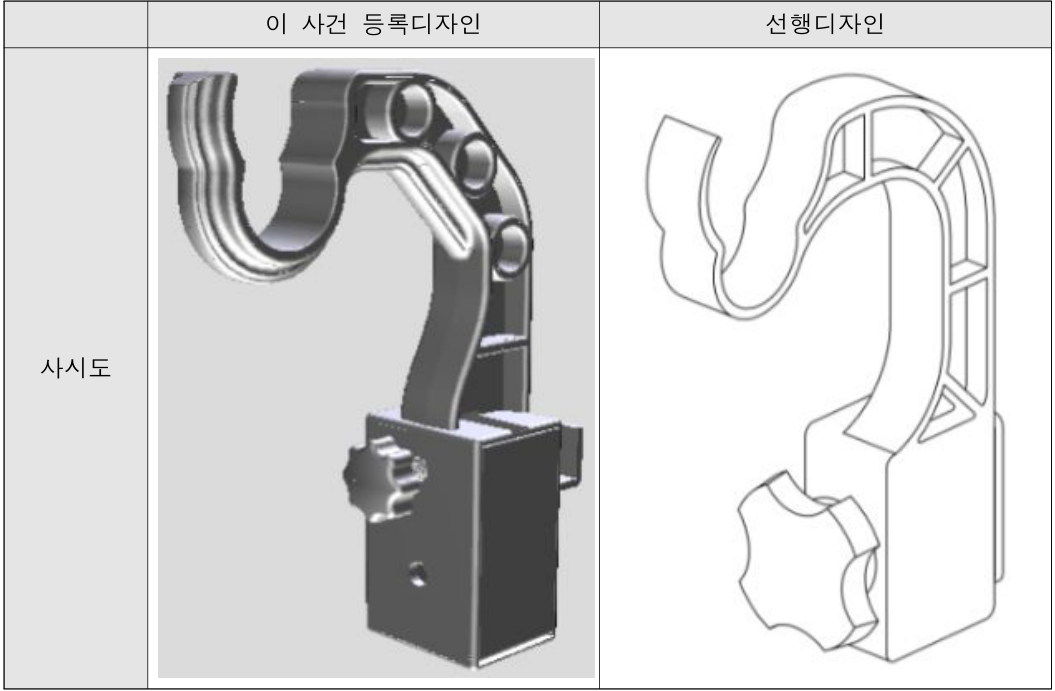
Five groups of differences
The differences included a small octagonal knob rather than a large wheel, two knob holes rather than one, and additional rear pressure-plate holes. The connector’s angle, cylindrical reinforcing ribs instead of straight walls, and its central rather than offset position also differed. The rod seat had a three-step outer contour instead of a flatter contour. The court regarded these as familiar variations or minor details, insufficient to overcome the shared configuration. Counting the differences did not determine their visual importance.
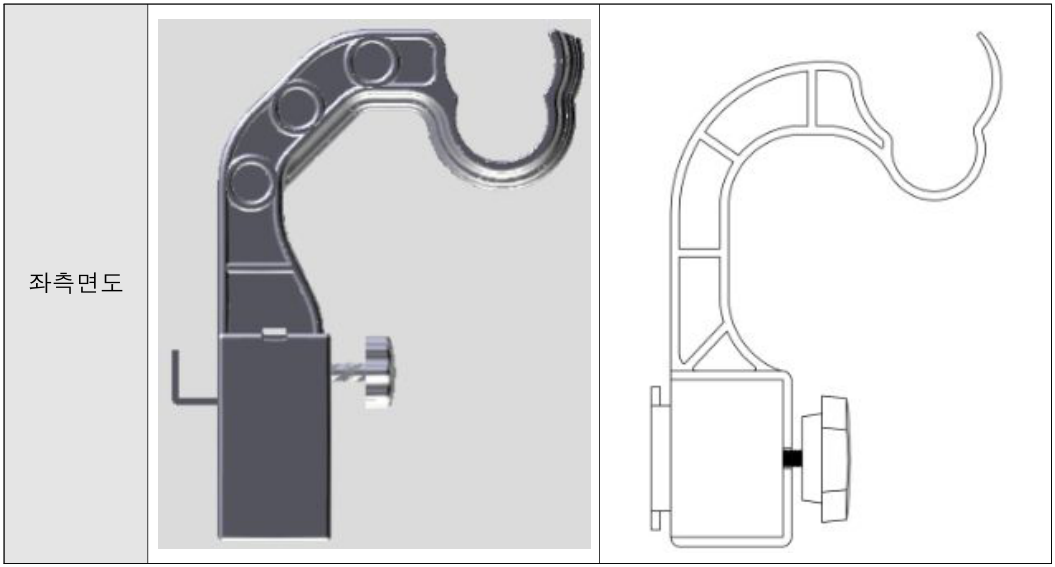
Visibility in actual use
The window frame and fixing knob concealed some rear features and holes during ordinary use. The product’s own advertisements also showed a holder largely hidden behind the curtain. An argument that the holder could alternatively be mounted above the frame did not change the overall comparison. The perspective, side, rear and front views helped distinguish features that attracted attention from those with limited visual effect.
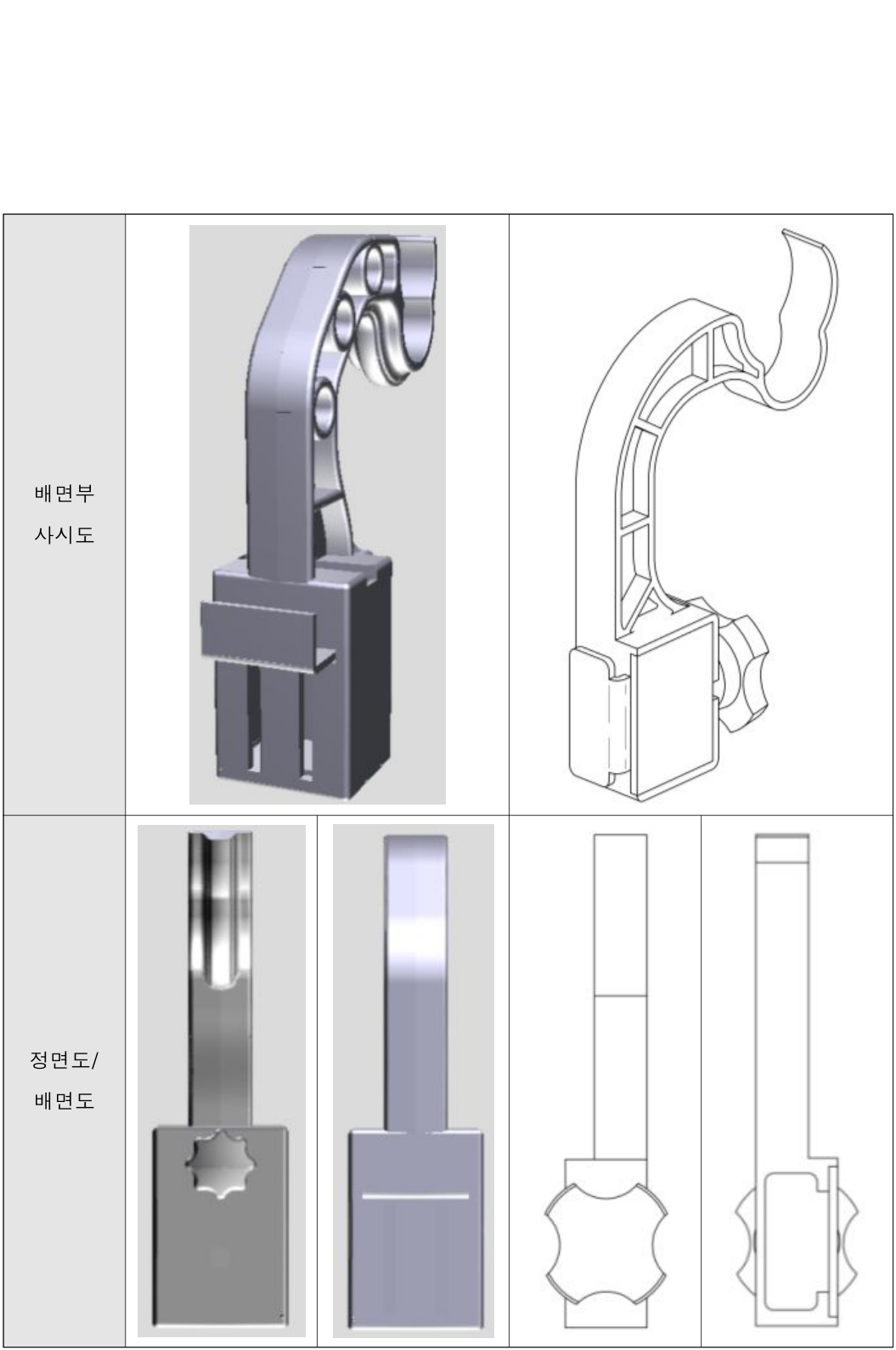
The result and the evidence to prepare
The court annulled the tribunal decision on similarity grounds. It did not need a separate determination that the design could easily be created, and it did not decide infringement damages. A useful design comparison should explain why each common or different feature matters to the whole appearance, supported by drawings and the normal installation and viewing conditions.
The original figure labels and forms are preserved; the text explains the source material.