

On 11 September 2025, the Korean Patent Court rejected the patentees’ challenge to the invalidation of claim 1 of patent 10-0454478. The issue was not whether the claimed high-rise construction method differed at all, but whether its differences were readily derivable at filing and whether the alleged limitations were actually claimed.
The method and the claim being examined
Filed on 18 April 2002 and registered on 18 October 2004, the patent concerned high-rise steel-reinforced concrete construction. Claim 1 erected steel columns in the core shaft, connected girders and assembled external steel beams through integral anchor connectors, partly embedded in the future core and partly projecting. Deck plates or slab formwork and reinforcement preceded concrete placement.
The final step allowed either simultaneous slab-and-core casting or slab first and core later. The court concentrated on the second alternative. The Board’s 21 August 2024 decision, 2024Dang851, concerned claim 1; this judgment must not be reported as determining all claims 2–4 or final invalidity of the whole patent.
Read the prior publication as a whole
Prior invention 8 was a composite-frame article in the American Institute of Steel Construction’s Engineering Journal, second quarter 1986. Newly submitted in court, it was assessed with common general knowledge rather than simply repeating the Board’s reliance on prior invention 1. Text and drawings disclosed steel framing, metal decking and mesh, then slab concrete followed by core shear-wall concrete. A core houses central circulation or services; shear walls resist lateral loads.
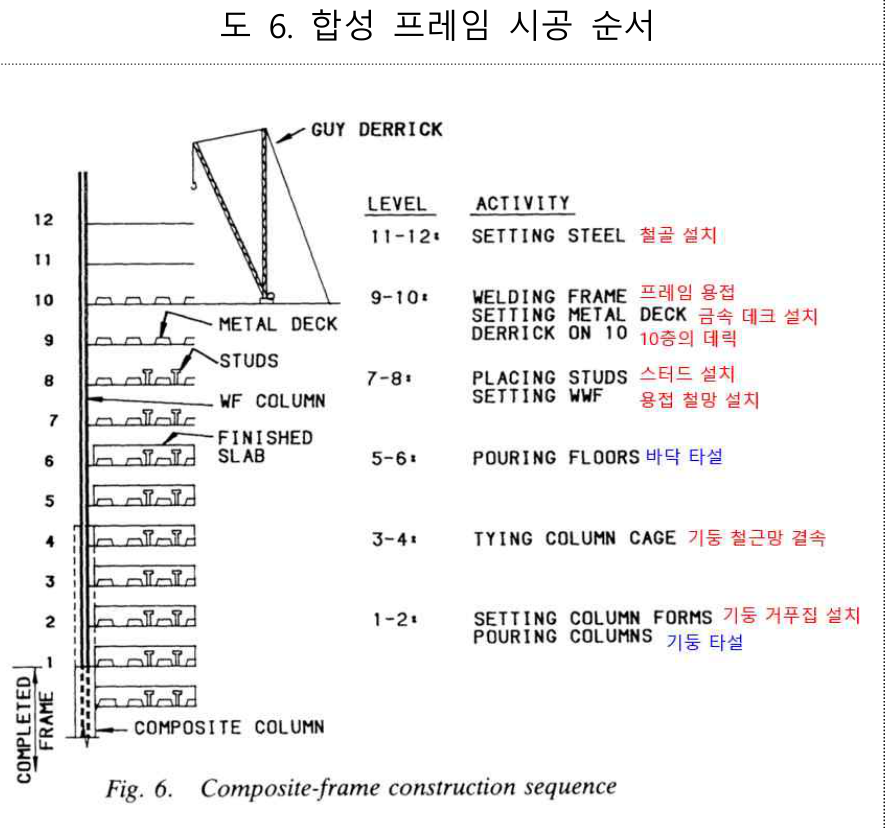
The patentees relied on a 1982 account of one building using pour strips and later infill. That different author’s project did not limit the broader 1986 publication, which drew on several buildings. Its drawings showed the slab-first sequence, and formwork methods avoiding pour strips were also known.
Three differences and their technical significance
The court recognised differences in erection sequence, anchor arrangement and core reinforcement. Installing columns, then intervening girders, then outward beams followed naturally from the frame and ordinary practice, without a special disclosed effect. Reinforcing a reinforced-concrete core and installing that reinforcement before casting were also common knowledge; no particular barrier prevented doing so alongside slab reinforcement.
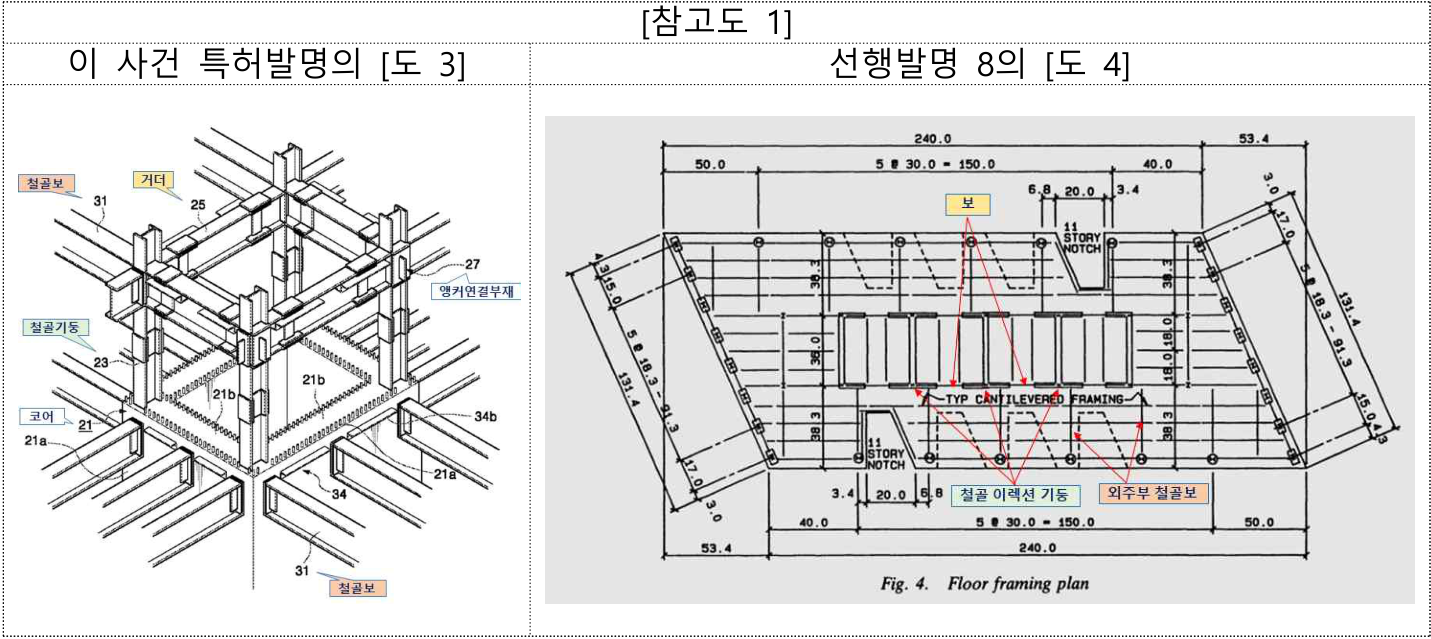
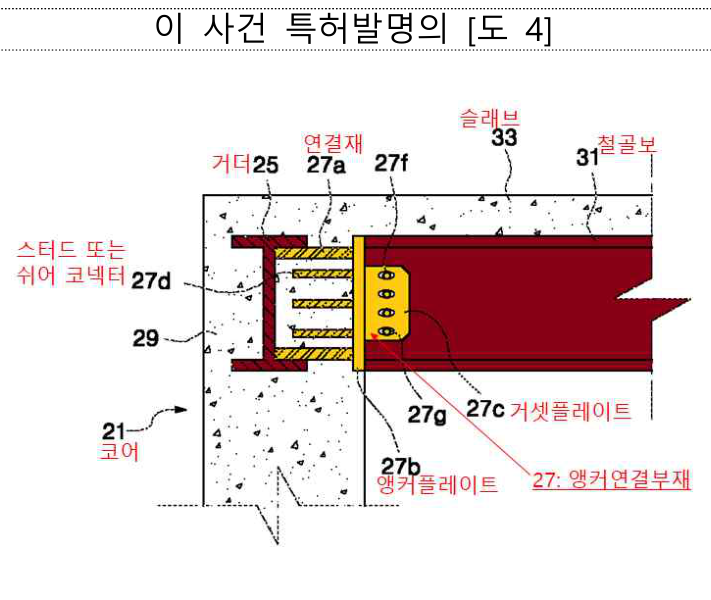
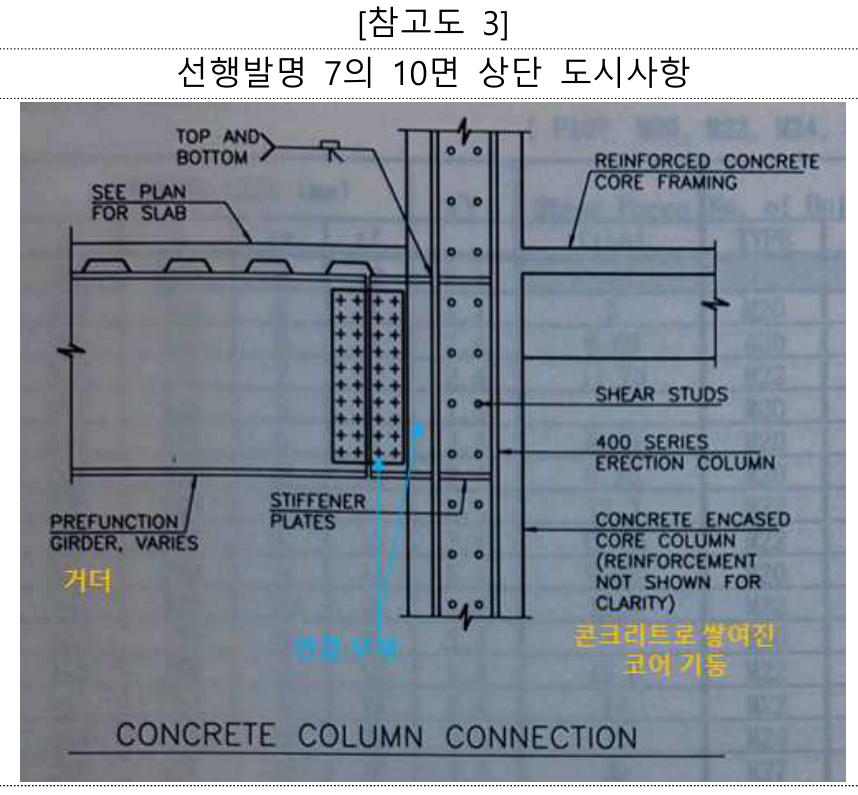
Connectors between steel members were evidenced by prior inventions 6 and 7, the patent’s background and the patentees’ statements in related scope proceedings. Once the frame preceded core casting, connectors became embedded; partial or complete embedment depended on wall thickness and member size. Prior invention 7 also showed partial embedment with outward projection.
Effects and unclaimed limitations
The asserted connection efficiency was an expected connector benefit, not a special effect supported for this arrangement. Access difficulties caused by building the core first were solved by erecting the frame before slab and core concrete—a sequence already available in prior invention 8—not necessarily by the projection itself. The claimed difference must be linked to the asserted effect.
Claim 1 did not require completing the entire sequence one storey at a time. The specification did not justify importing that restriction, and storey-by-storey construction was itself known. Arguments about omitting bracing or stub girders likewise lacked a disclosed special effect and improperly restricted the cited publication by another project’s details.
The limited outcome and drafting lesson
Claim 1 was readily derivable from prior invention 8 with common general knowledge, so the action was dismissed. For a method patent, identify why a particular order is technically necessary, which problem a placement solves and where that limitation appears in the claim. Examine each expressly permitted alternative. These are drafting implications, not a new judicial requirement for a particular experiment or numerical threshold.
The original figure labels and forms are preserved; the text explains the source material.