
Occasional forgetfulness becomes more common with age and may cause concern about dementia. Memory decline alone, however, is not enough to establish that diagnosis.
There are three main types of dementia diagnosis: cognitive function tests, brain imaging tests, and blood tests.
In this post, we will explain the patent related to the diagnosis of dementia through the artificial intelligence of JLK.
The patent.
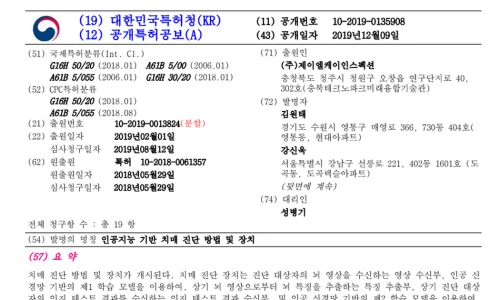
Click the image to view the published patent application.
Alzheimer's disease can cause progressive difficulties with memory, other cognitive abilities and behavior. Dementia describes cognitive impairment severe enough to affect daily functioning and can have several causes. Alzheimer's disease is its most common cause.
The patent background discusses experimental diagnostic approaches using miR-206 expression in olfactory tissue or biomarkers in blood.
Such approaches can require specialized testing or invasive sample collection, which may burden patients.
The patent proposes an approach intended to reduce reliance on invasive sampling or specialized tests. The proposed process is described below.
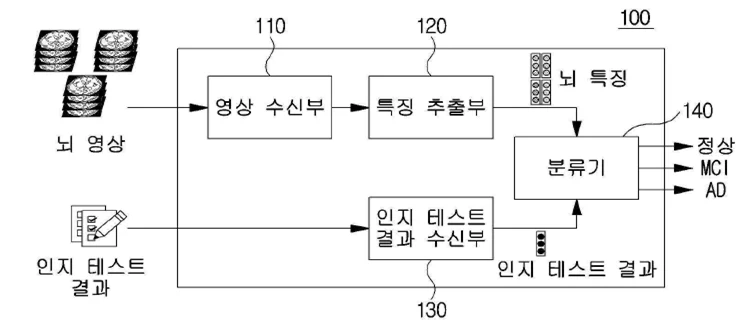
According to the patent, A neural-network feature extractor receives brain images and outputs features relevant to dementia classification.The extractor uses convolutional layers with max or average pooling.
Brain Imaging
Cognitive assessment results, including those relevant to mild cognitive impairment, are combined with the image features and supplied to an AI classifier. The patent discusses model options such as SVMs, 3D CNNs and autoencoders.
The classifier outputs a category such as normal cognition, mild cognitive impairment or Alzheimer's disease.
The brain features may include volumes of structures such as the hippocampus and ventricles, regional measurements and cortical thickness.
When brain feature information including volume information of brain organs is entered into an AI-based classifier, an AI-based classifier can generate difference values by comparing the volume of normal brain organs and the volume of the brain organs of the person being diagnosed, and further use the difference values to classify the status of the person being diagnosed.
The patent combines imaging features with cognitive test results, aiming to improve classification compared with using either source alone.
This article reflects the information available when it was published. Contact us to discuss your circumstances.