
- Deepfakes
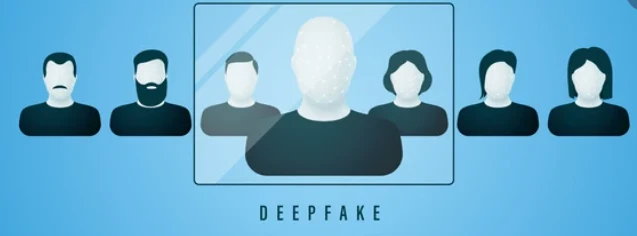
Deepfake refers to the use of AI technology to synthesize the face of a particular person in a particular video. In April 2018, a video of former US President Barack Obama criticizing President Donald Trump became known to the world.
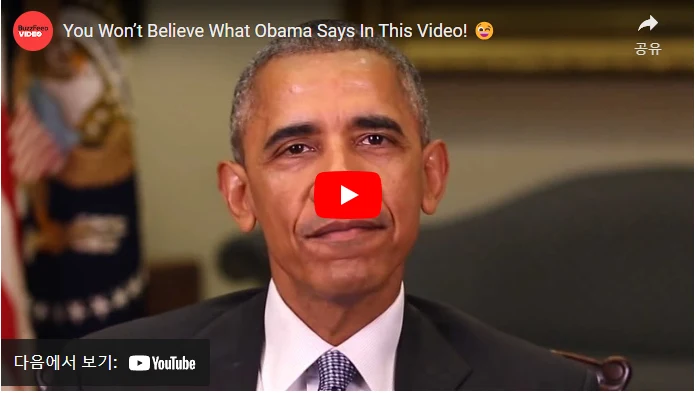
Deepfake techniques can synthesize or alter faces, gestures and voices. GANs are one family of models used for such generation.
This article explains GANs in more detail.
- Generative Adversarial Networks (GANs)
A GAN comprises two neural networks.
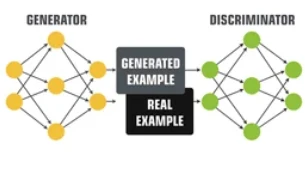
A generator creates synthetic samples, while a discriminator learns to distinguish them from real examples.
[Training data]
GAN training requires real examples of the data the generator should emulate. A model intended to generate human faces, for example, needs face images as training data.
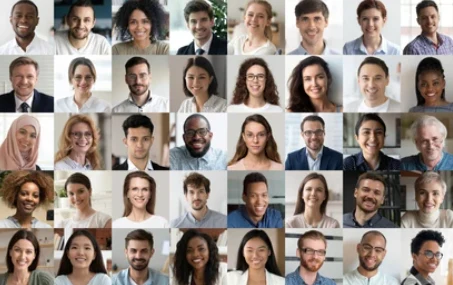
Face-image dataset
[Training]
A basic GAN does not require class labels for each training example. The generator and discriminator learn through an adversarial process, each improving in response to the other.
[Generation]
The generator learns to produce samples that resemble the training data and fool the discriminator. It typically takes random noise as input and maps that noise to structured output with patterns resembling the real data.
[Discriminator]
The discriminator learns to distinguish real training examples from samples produced by the generator. It receives a real or generated sample and outputs an estimated probability that the sample is real.
Discriminative models perform tasks such as classification, whereas GANs generate new samples. Applications include image synthesis, but deceptive impersonation and unauthorized use of someone's likeness also raise ethical concerns.
GAN applications extend beyond image synthesis, and the field remains an active area of research. Patent analysis also shows how adversarial training can support models that are robust to noise.
This article reflects the information available when it was published. Contact us to discuss your circumstances.