
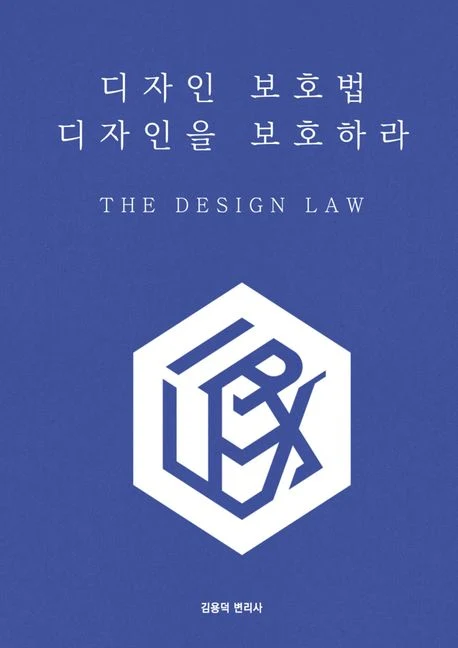
Yongduck Kim, Managing Partner of IPLEX, has published Design Protection Law: Protect Your Designs. The book explains why design protection matters, what the Design Protection Act protects, and how similarity is assessed through examination standards and court decisions.
A Korean saying expresses a familiar preference: when the price is the same, choose the more attractive item. It reflects a longstanding understanding of the importance of product appearance. Today, design matters across industries. Consumers often make purchasing decisions based on appearance, and even strong functionality may not secure a sale if a design does not appeal to them. Design can therefore influence a company’s future.
Translated excerpt from the book
The importance of design is emphasized throughout modern business. Consumers consider a product’s appearance when buying it, and excellent functionality alone may not be enough if they dislike the design. Design can therefore influence a company’s future. Competition among industrial products can be viewed in terms of price, performance and design. As competition develops, the emphasis may move from price to performance and then to design, which acts as the final salesperson.
Developing a design takes time, effort and money, and those costs are reflected in the product’s price. A competitor copying the design may avoid the development expense and offer an otherwise similar product more cheaply. If consumers see the same product with the same design, they may choose the lower-priced version, weakening the original developer’s competitiveness. This problem arises because a design concerns appearance and is relatively easy to imitate. The Design Protection Act offers a means of protecting designs created through substantial effort and expenditure.
Translated excerpt from the book
The book begins with the effect of design on consumers and the problems that can arise when design rights are not secured. Public awareness of design rights is often lower than awareness of patents and trademarks. Disagreements over imitation and copying are common, and obtaining design rights can provide an important legal basis for responding to them.
One example is Muglid, a disposable coffee-cup lid developed in Korea with an elongated drinking spout.
A Korean company developed Muglid with an elongated drinking spout. Its origin was an accidental discovery: after burning his lips on hot coffee, the developer pictured a way to prevent the problem and sketched it on a napkin. The design was developed further, and the book describes 74 design registrations covering it. By registering different forms of Muglid, the developer sought protection for the product’s variations. The book presents it as an example of using the Design Protection Act to protect a commercially developed design.
Translated excerpt from the book
The author explains the designs eligible for protection, organizes the examination standards used to assess design similarity, and examines the operation of design law through relevant cases.
View the book at the bookstore
Explore the book
Design Protection Law: Protect Your Designs
View book at the bookstore ↗Book details