
Pattern-recognition research explores how to apply efficient human recognition processes to computers, including the classification of input patterns into defined groups.
One such study is the study of artificial neural networks, which modelled the characteristics of biological neurons in humans by mathematical expression.
To solve the problem of classifying input patterns into specific groups, the artificial neural network uses algorithms that mimic human learning. Through this algorithm, the artificial neural network can generate a mapping between the input and output patterns, indicating that the artificial neural network is capable of learning.
Neural networks can generalize from training examples to unseen inputs. Deep networks often require substantial data, and overfitting to a narrow training set must be controlled.
This article examines a VUNO patent on augmenting medical-image training datato improve generalization and reduce overfitting. VUNO patent
[Patent]
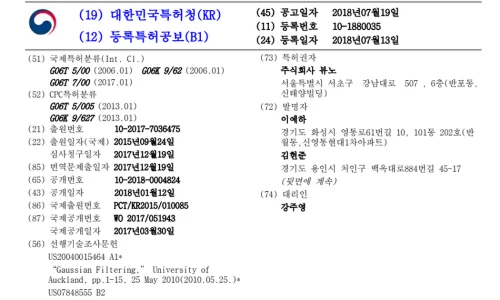 Click on the image to view the registration patent publication.
Medical images can contain a wide range of intensity values. A display window selects and maps part of that range to create an image suitable for viewing or model training.
According to the patent, training images are created using varied intensity windows..
The extraction range is controlled through the window center and width.
Randomly varying these parameters produces different views of the source data, reducing reliance on a fixed intensity range and helping the model generalize.
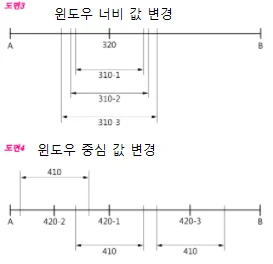
This window-based augmentation can increase training diversity and improve model robustness.
This article reflects the information available when it was published. Contact us to discuss your circumstances.